Summary:
This blog breaks down Apple Vision Pro app development in a simple, practical way for businesses exploring AR and VR app solutions. It explains what the device can do, where it fits across industries like healthcare, retail, education, and real estate, and how the full development process works from concept to launch. You’ll also find cost ranges, future trends, and tips for choosing the right development partner so teams can build meaningful, immersive experiences with confidence.
The world of AR and VR has been speeding up so fast that sometimes it feels like you blink and boom, something new drops. Apple Vision Pro is one of those “okay, wow” moments. Apple basically decided to blend the real world with digital magic, and here we are, trying to keep up (in a good way).
This guide walks you through what Apple Vision Pro is, why businesses are suddenly really into it, and what you need to know if you’re thinking about Apple Vision Pro app development. Don’t worry, nothing too fancy, just clear, real talk, the way you’d explain it to a friend over coffee.
What is Apple Vision Pro?
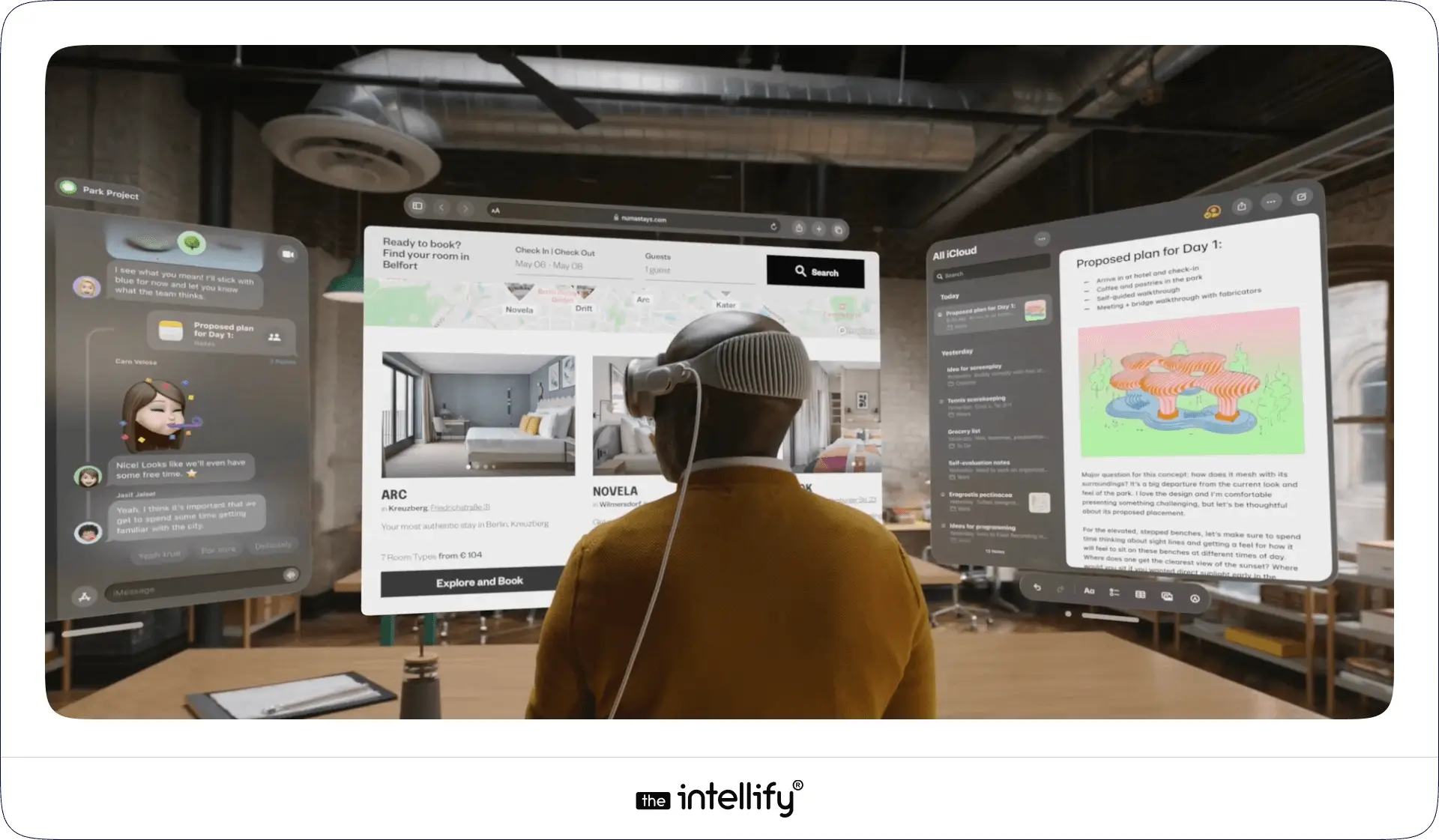
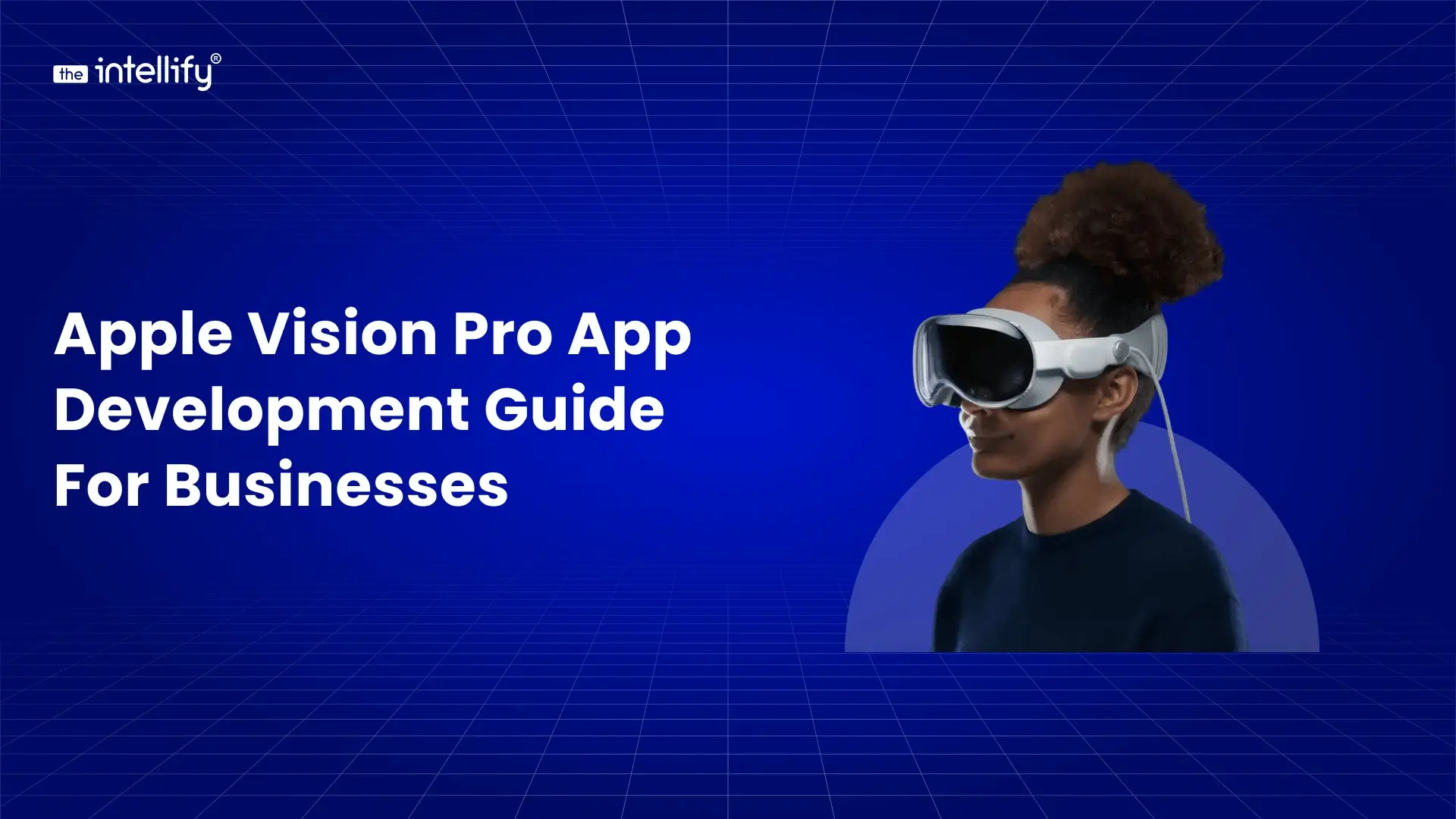
Apple Vision Pro is Apple’s mixed-reality headset kind of like slipping on glasses that know more about you than your phone does. It blends AR and VR together so smoothly that the lines disappear. The displays are so sharp that even tiny details pop, and the spatial audio almost feels like someone whispered behind you (which can be creepy but cool).
This whole thing runs on visionOS, which Apple built just for immersive experiences. And honestly, it shows. Everything feels smooth, responsive, and kind of… natural? Like you’re not fighting with the interface.
For businesses, this opens a ton of doors, new ways to teach, sell, entertain, and just create moments users actually feel, not just click through.
Why Build Apps for Vision Pro? Market Opportunity
If you’re wondering whether Vision Pro is “worth it,” well… yes. The interest around immersive tech has been rising like crazy, and Apple jumping in has basically poured fuel on that fire.
- Rapid Adoption: Whenever Apple does something new, people pay attention. Same story here.
- Wide Applications: Pretty much every industry can use AR/VR in some meaningful way, education, real estate, retail, healthcare, entertainment, you name it.
- Higher Engagement: Immersive experiences just hit different. Users stay longer, connect deeper, and remember more.
So yeah, the market opportunity is big. And it’s getting bigger by the month.
Key Features of Apple Vision Pro
Vision Pro isn’t just shiny hardware. It’s loaded with tech that actually matters when you’re building apps:
- High-Resolution Displays: The visuals are almost too crisp, it’s like looking through a freshly cleaned window (a rare moment when cleaning actually pays off).
- Spatial Audio: Sound comes from where it should come from. It’s weirdly satisfying.
- Advanced Sensors: These track your hands, eyes, and movements so smoothly that you forget sensors even exist.
- Gesture Control: Tap, pinch, flick, no controllers needed.
- Apple Ecosystem Integration: If you’re in the Apple universe, everything just fits together. Seamlessly.
These features make building immersive apps easier and a lot more fun.
Why Businesses Are Investing in Vision Pro App Development
Businesses are diving into Vision Pro app development for a bunch of reasons, some practical, some visionary (pun totally intended):
- Better Brand Experiences: Brands can create moments users remember, not just screens they swipe.
- Operational Efficiency: AR can shorten training, simplify repairs, and speed up processes.
- Competitive Edge: Early adopters always stand out. And customers notice.
If your business wants to stay ahead, this is a pretty solid place to start.
Vision Pro App Development Use Cases Across Industries
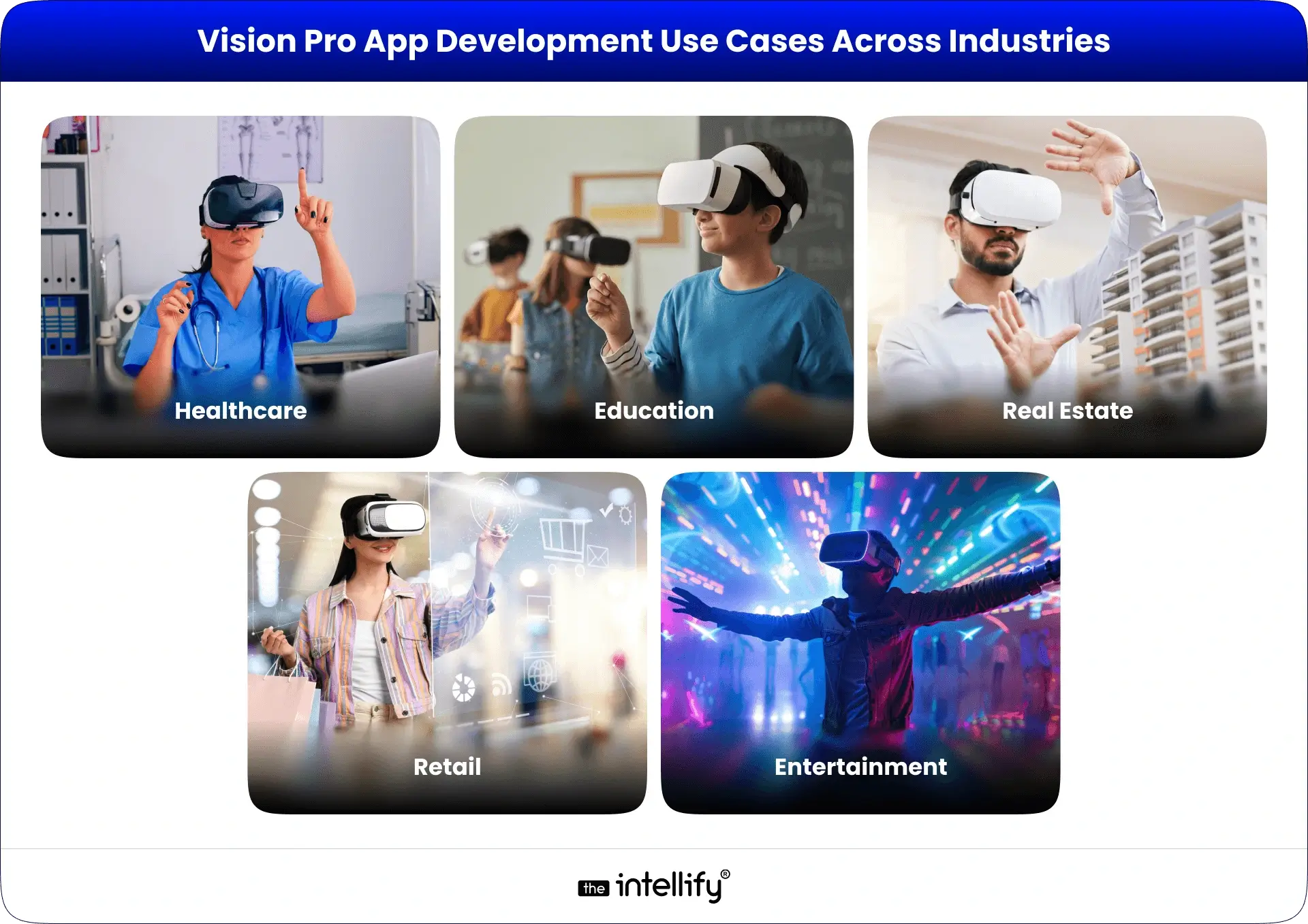
Different industries are picking up Vision Pro for different reasons. Here’s where it really shines:
1. Healthcare
- Surgical Training: Surgeons can practice without stepping into the operating room.
- Patient Education: Visuals help patients finally “get” what’s happening inside their own bodies.
2. Education
- Interactive Learning: Imagine studying planets while literally standing “between” them.
- Virtual Classrooms: Remote classes stop feeling like boring video calls.
3. Real Estate
- Virtual Tours: Buyers can tour homes without sitting in traffic.
- Augmented Staging: Add furniture, change colors, goodbye imagination struggles.
4. Retail
- Virtual Try-Ons: Try clothes, makeup, even glasses, instant vibes check.
- In-Store Navigation: No more wandering aisles like you’re hunting treasure.
5. Entertainment
- Immersive Games & Media: Step into the world, not just watch it.
- Live Events: AR layers can make concerts and shows feel next-level.
Across all these, one thing’s clear: Vision Pro + visionOS unlocks a new kind of creativity for businesses.
Apple Vision Pro App Development Process: Step-by-Step
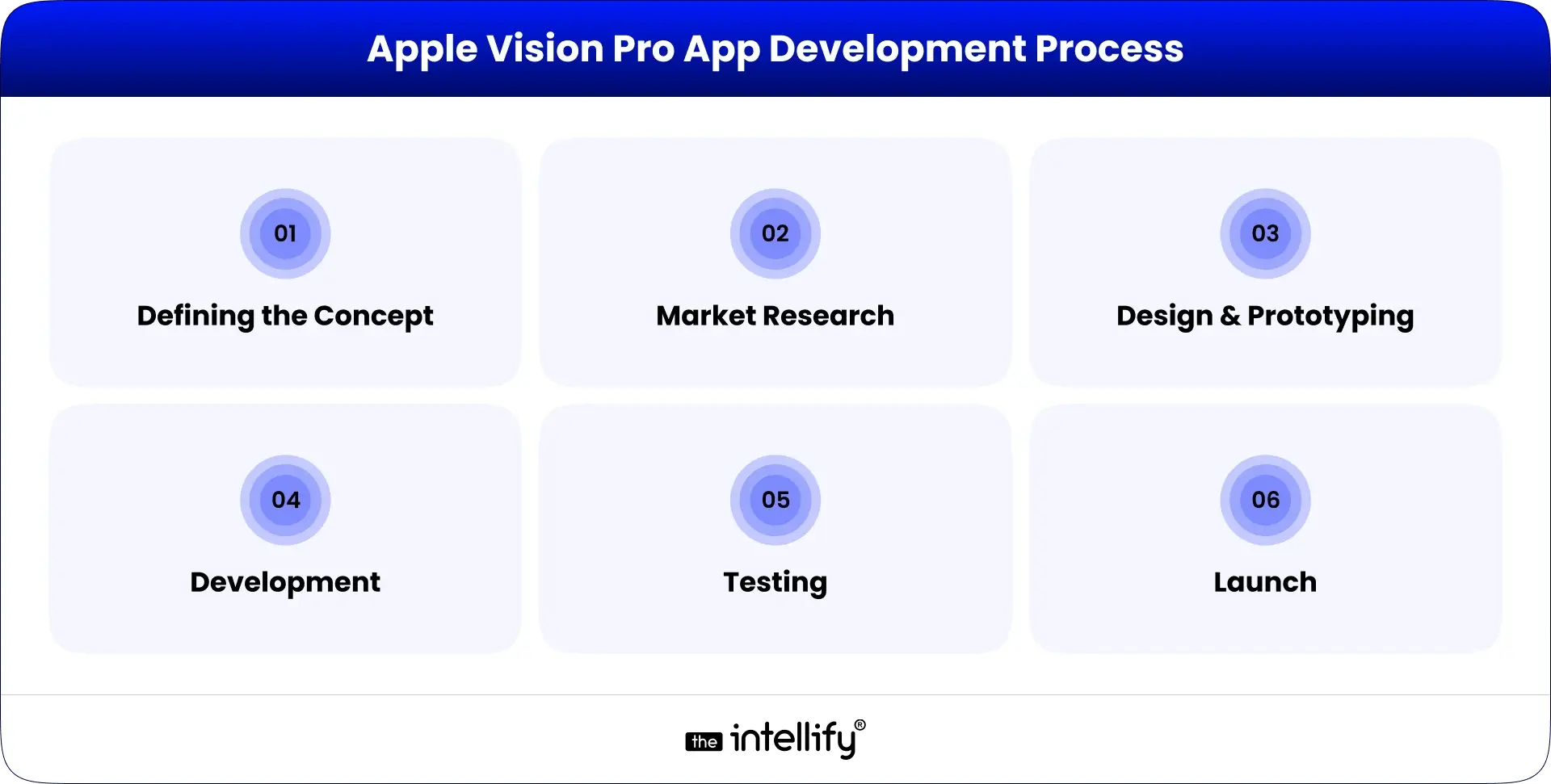
If you’re figuring out how to develop Vision Pro apps, the process looks something like this:
1. Defining the Concept
- Identify Goals: What’s the point of your app?
- Audience: Who’s it for?
2. Market Research
- Study competitors (yep, everyone’s doing it).
- Gather feedback from real users, not just internal teams.
3. Design & Prototyping
- Wireframing: Draft out how the app will flow.
- Mockups: Add visuals that make things feel real.
4. Development
- Build using ARKit + visionOS tools.
- Connect Apple APIs for spatial audio and more.
5. Testing
- Put real users in the headset.
- Tweak things. Then tweak again. And again.
6. Launch
- Submit to the App Store.
- Run marketing to get eyes (and downloads) on it.
How Much Does Apple Vision Pro App Development Cost?
Vision Pro app development costs depend on how wild or simple your idea is. Here’s the gist:
- Features Complexity
- Design Requirements
- Development Team Expertise/Location
Estimated Costs
- Ideation & Design: $5,000 – $20,000
- Development: $15,000 – $100,000+
- Beta Testing: $5,000 – $15,000
- Marketing & Launch: $5,000 – $30,000
Cost-Saving Tips
- Start small (an MVP never hurt anyone).
- Outsource smartly to save money without sacrificing quality.
Managing Vision Pro app development costs is all about knowing what you really need at each step.
Future Outlook & Why Now is the Time
The future for Apple Vision Pro looks bright. Like, “we might look back and laugh at flat screens” bright.
Trends to Watch
- More use cases are popping up everywhere
- Hardware upgrades (because Apple always has a “one more thing”)
- Real-time data blending AR + IoT
If you’ve been waiting for the “right moment,” it’s probably now.
How to Choose the Right Vision Pro App Development Experts
Here’s what matters when choosing an Apple Vision Pro development company:
- Expertise: A team that understands AR/VR and Apple’s tools.
- Portfolio: Real work you can actually see.
- Client Testimonials: Honest feedback from people who’ve been in your shoes.
- Collaboration Style: Good communication saves projects. Always.
- Post-Launch Support: Apps need updates, no getting around it.

Conclusion
The Apple Vision Pro isn’t just another gadget, it’s a shift in how we experience digital content. Businesses that invest in VR app development now will have the early advantage, better user engagement, and honestly… a cooler product lineup.
From training to shopping to entertainment, AR and VR are opening doors we haven’t fully explored yet. If you’re planning to innovate, now’s a great time to step in and build something users will remember.
Frequently Asked Questions (FAQ’s)
1. What is Apple Vision Pro app development?
Apple Vision Pro app development focuses on creating applications tailored for Apple’s mixed-reality device, the Vision Pro, leveraging its distinct AR/VR capabilities.
2. Why should businesses invest in Vision Pro development?
Investing in Vision Pro development allows businesses to engage customers in fresh ways, boost operational efficiency, and maintain competitiveness in a fast-evolving market.
3. What industries can benefit from Vision Pro app development?
Healthcare, education, retail, real estate, and entertainment are all poised to gain from the innovative applications built for the Vision Pro.
4. How much does it cost to develop an app for Apple Vision Pro?
Costs can vary widely based on feature complexity and design needs, typically starting around $5,000 for ideation and reaching upward of $100,000 for comprehensive apps.
5. What features make the Apple Vision Pro stand out?
High-resolution displays, spatial audio integration, advanced sensors, and intuitive gesture control are among the key features that facilitate immersive experiences.
6. How to choose the right Apple Vision Pro development company?
Seek a team with expertise, a robust portfolio, client testimonials, strong collaboration skills, and post-launch support to ensure you find the perfect development partner.
7. How can The Intellify help with Vision Pro app development?
The Intellify specializes in AR/VR app development, delivering tailored services that enable businesses to create innovative applications for the Apple Vision Pro, maximizing user engagement and business impact.